
CE HE | SAFEDROP: Multimodal Photonic-Electronic Sensor Platform for Rapid Health and Environmental Daignostics
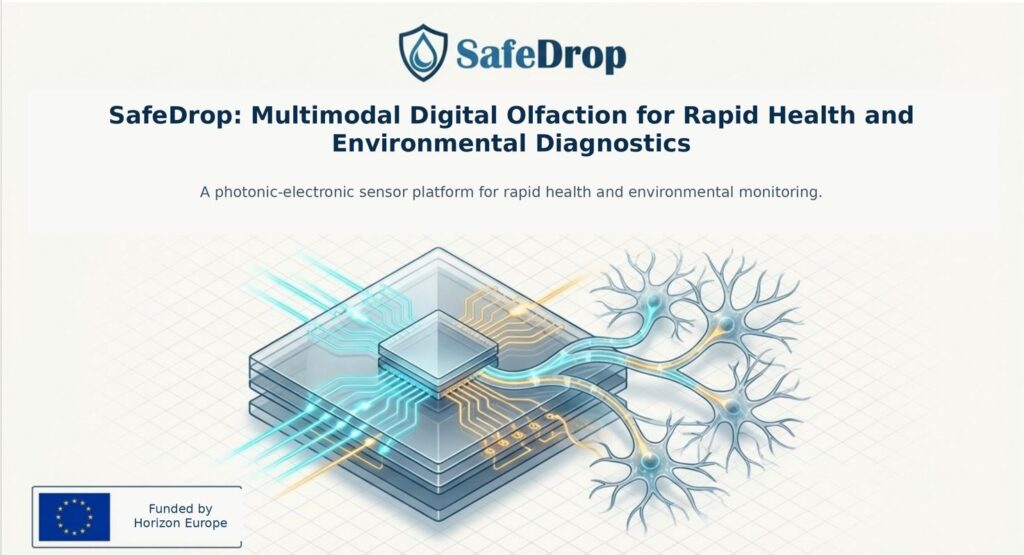
The European project SAFEDROP was created to develop a new generation of compact devices for the rapid, on-site detection of chemical and biological contaminants. Today, many high-reliability analyses require specialized laboratories, complex instrumentation, and response times that are not always compatible with the need for immediate action. SAFEDROP aims to close this gap between measurement and decision-making by developing a portable, versatile sensor platform tailored for various application sectors.
An Olfactory-Inspired Approach
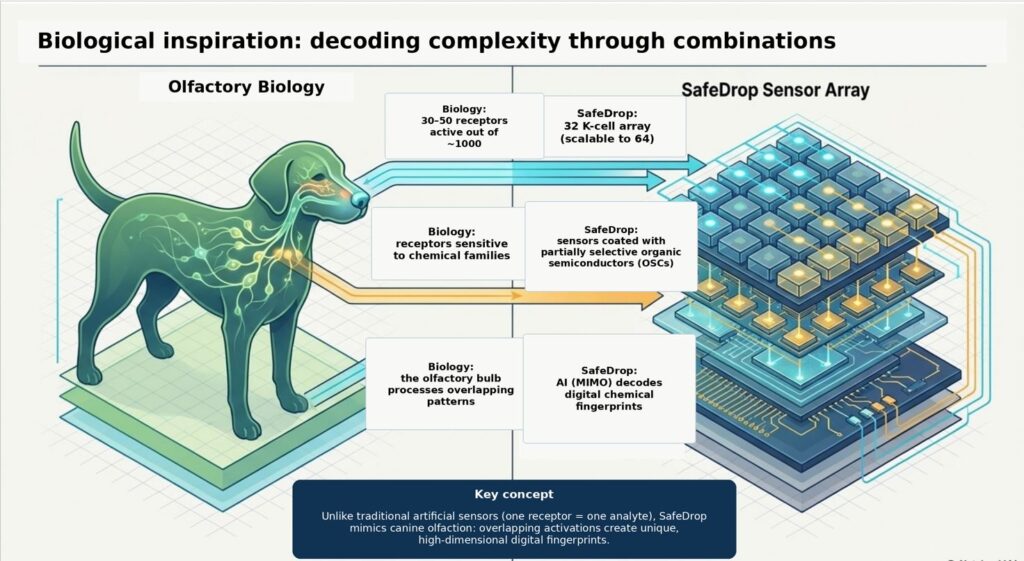
The core idea behind the project is inspired by the mammalian sense of smell. Rather than identifying a substance through a single, highly selective sensor, recognition relies on combining response patterns from multiple sensing elements. Together, these signals generate a unique footprint, which is then interpreted using mathematical models and Artificial Intelligence systems. This approach makes it possible to analyze complex mixtures and operate under variable environmental conditions, significantly improving recognition reliability compared to conventional, single-mode sensors.
A Multimodal and Adaptable Platform
SAFEDROP integrates photonic, electronic, and microfluidic technologies within a shared platform. Signals acquired through different measurement modalities are processed jointly to distinguish the presence of analytes from interfering factors, such as temperature, humidity, or sample composition. The same architecture can be reconfigured for different applications by adjusting the sensitive materials and recognition models, without requiring a complete redesign of the system. In this way, the project aims to create a modular, scalable technology that can be deployed even outside highly specialized laboratories.
Applications Across Four Strategic Sectors
The platform will be validated through dedicated use cases in water quality monitoring, healthcare diagnostics, food safety, and air quality control. In the water sector, the project will study the rapid detection of chemical and biological contaminants. In healthcare, a solution for the rapid screening of infections will be developed to support more timely clinical decisions. For the food industry, SAFEDROP will analyze the feasibility of identifying contaminants and spoilage directly within production processes. Finally, air monitoring will serve as an exploratory application for identifying volatile organic compounds (VOCs) and environmental risk indicators.
Spike Renewables’ Contribution
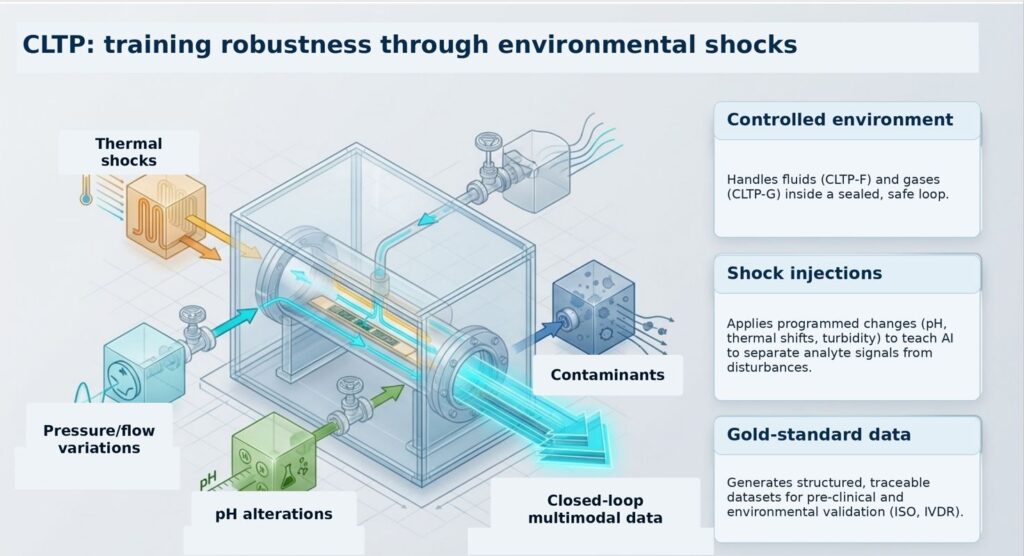
As part of the international consortium coordinated by the Fraunhofer Institute for Applied Polymer Research, Spike Renewables contributes to the development of the experimental platforms required to test and validate the new sensors. Specifically, Spike is involved in designing and constructing closed-loop testing systems engineered to replicate controlled operating conditions for liquid and gaseous samples. These testbeds will enable automated, programmed variation of test parameters to collect reliable data for sensor characterization and the training of analytical models. This work leverages Spike’s extensive expertise in designing experimental plants, fluidic circuits, control systems, and data acquisition platforms. The company’s contribution is focused on transforming the sensor technologies developed by the partners into verifiable, repeatable systems that can be progressively transitioned toward industrial applications.